Trump Ripped for Total Surrender Peace Deal Debacle
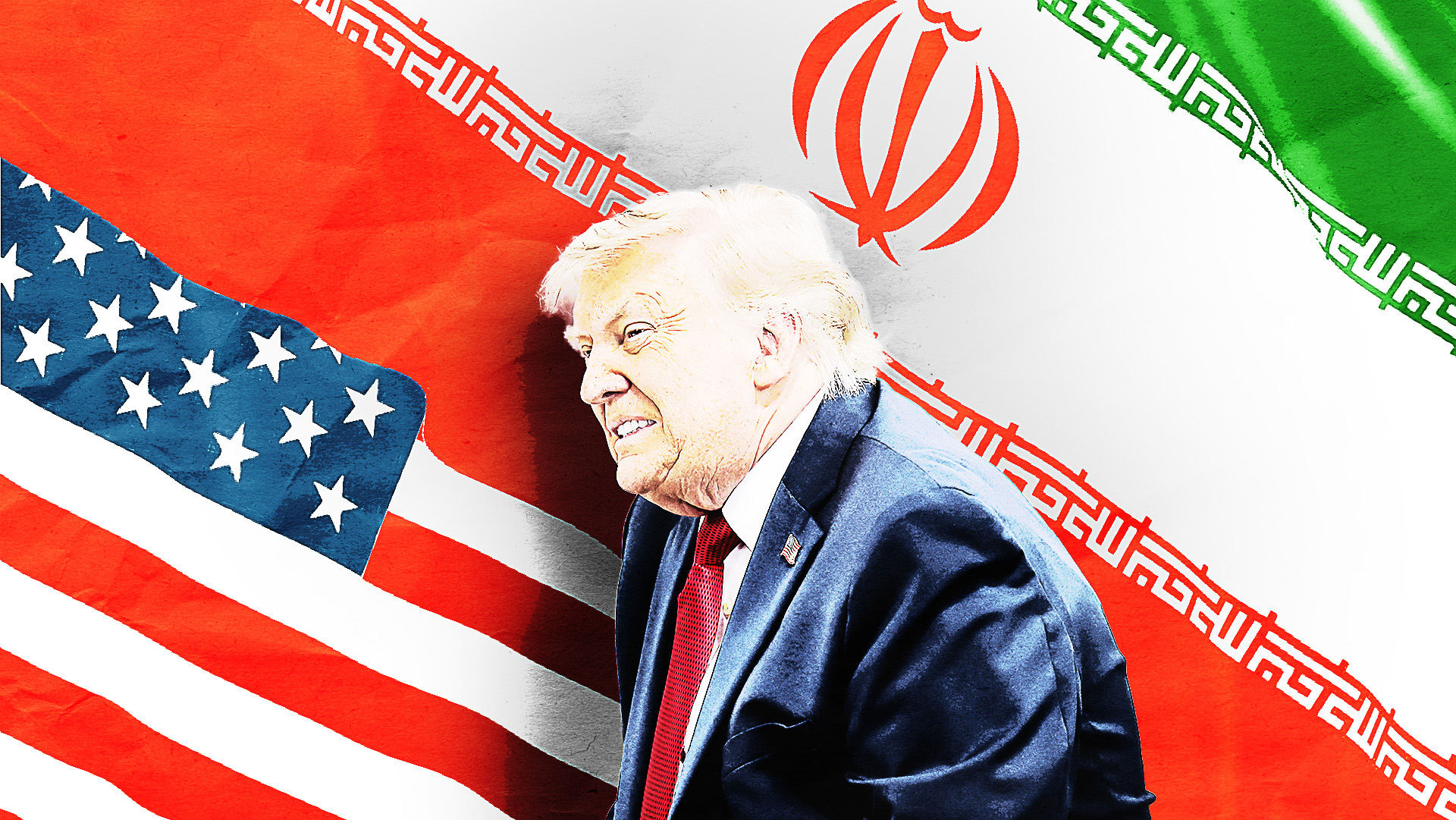
Donald Trump already appears to be undermining his own memorandum of understanding to end the war with Iran just days after announcing the agreement had been reached.
Read more Pentagon Pete Roasted For ‘Frat Boy’ Outfit
Trump, 80, said the 60 days outlined in the deal was not a hard deadline to reach a final agreement with Iran to end the war and suggested that it “could take longer.”
The president commented when asked by a reporter in Paris on Wednesday about the timeline. The memorandum of understanding, as it stands, states that the two sides would aim to reach an agreement within 60 days.
The president also told reporters that it would be “a little bit unfair” for Iran not to have ballistic missiles, “if other countries have them.”
“A ballistic missile is not the same thing we’re talking about when we talk nuclear,” Trump said.
The White House finally revealed the full 14-point memo set to be signed with Iran in the coming days on Wednesday, after a slow drip of information about individual aspects over the past few days.
It was a sharp contrast from when the president once demanded “UNCONDITIONAL SURRENDER” by Iran in March.
The first provision in the memorandum of understanding declares “the immediate and permanent termination of military operations on all fronts, including in Lebanon.” It specifically indicates that both sides “refrain from the threat or use of force against each other.”
However, at his press conference on Wednesday, Trump threatened to bomb “the hell” out of Iran if it did not comply with the agreement.
The memo states that the U.S. and Iran “commit to negotiating and achieving the final deal in a maximum of 60 days, extendable with mutual consent.”
But the agreement then goes on to present a series of what appear to be concessions by the U.S. to Iran and uses temporary language regarding the Strait of Hormuz.
It states that upon signing the document, Iran will “make arrangements using its best efforts for the safe passage of commercial vessels with no charge for 60 days only from the Persian Gulf to the Sea of Oman, and vice versa.”
It indicated that the opening of the crucial waterway would begin immediately, but also said that Iran would engage in talks with Oman “to define the future administration and maritime services in the Strait of Hormuz.” Other Persian Gulf states would also be part of discussions in line with “applicable international law.”
Before the U.S. launched strikes on Iran, the key waterway had been completely open for shipping.
Read more Billionaire MAGA Candidate Caught on Shocking Rape Tape
Upon signing the deal, the U.S. would “begin the removal of its naval blockade and any disturbances or impediments” against Iran. The blockade, according to the agreement, would end in full in 30 days.
“During this period, the traffic of vessels will be in proportion to the number of pre-war traffic being restored by the Islamic Republic of Iran,” it states. “The United States of America further undertakes to remove its forces from the proximity of the Islamic Republic of Iran within 30 days after the final deal.”
The memorandum of understanding also says that Iran could gain access to hundreds of billions of dollars. It declares that the U.S. would work with regional partners to develop a plan for at least $300 billion for the “reconstruction and economic development” of Iran. The mechanics of the plan would be finalized as part of the final deal within 60 days.
It also concedes that the U.S. would terminate “all types of sanctions” against Iran, including primary and secondary ones, on a schedule as part of the final deal.
Meanwhile, once the memo is signed, and until the sanctions are lifted, the U.S. Treasury will issue waivers for Iran to export crude oil and other petroleum products.
The U.S. will also move to make frozen Iranian funds available when the memo is implemented. The procedures to release those funds will be part of the negotiations.
In exchange, it states that Iran “reaffirms that it shall not procure or develop nuclear weapons.” The U.S. and Iran will have to work to determine mechanisms for disposing of enriched material. The final framework would be agreed upon in the final deal.
In the meantime, the U.S. and Iran will “maintain the status quo” when it comes to Iran’s nuclear program, and the U.S., in return, will not impose new sanctions or deploy additional forces.
Lawmakers on both sides of the aisle have been sounding the alarms as the deal was revealed and have demanded briefings on it. Outgoing Republican Senator Bill Cassidy called it the “worst foreign policy blunder in decades.”
“Reagan is rolling over in his grave. Iran’s nuclear ambitions were not curbed, and they have learned that threatening the Strait of Hormuz works and will undoubtedly leverage it in the future,” Republican Sen. Bill Cassidy wrote on X. “Now, Iran gets to build brand-new infrastructure under this deal. Before the war, the strait was open, Iran was being crushed by sanctions, and 13 service members were still alive. Now, 13 Americans are dead, families have paid billions at the pump, sanctions will be lifted, and the bombing has stopped.”
Conservative podcaster Ben Shapiro ripped into it on Fox News as a “disaster that does not achieve any of the signal goals that were set by the administration at the beginning.”
Shapiro criticized Vice President JD Vance as the “chief negotiator” on it for having “not well served the president.”
Trump suggested at his Wednesday press conference that, should the deal be a success, he would take the credit, but if it goes south, he indicated he would throw Vance under the bus.
Read more Strongman Trump’s ‘Forever Wars’ All Come Back to Jeffrey Epstein












Post Comment