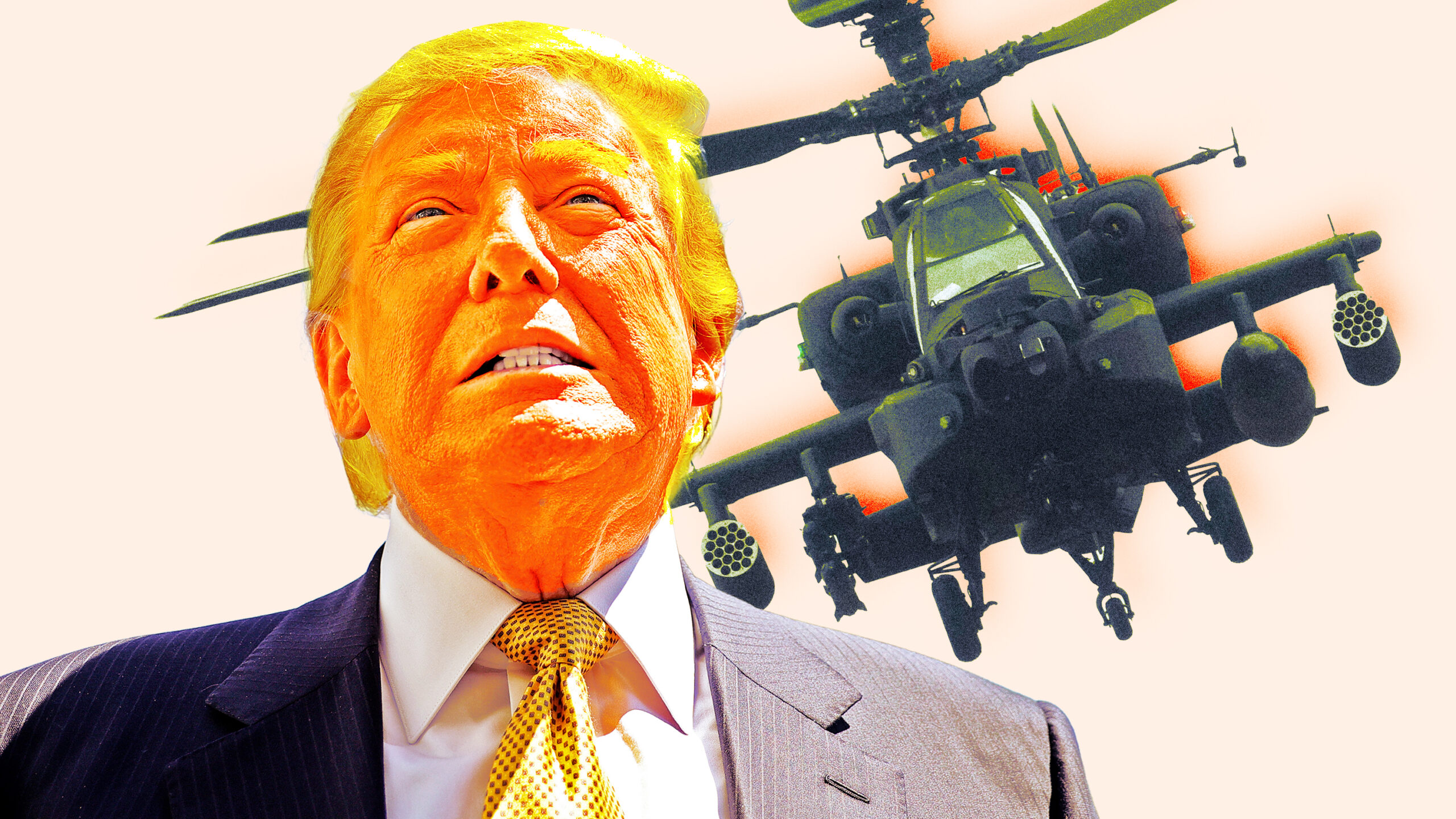
Trump Admits Chopper Was Downed by Military He ‘Obliterated’
Donald Trump raised the prospect of escalating his war after blaming Iran for shooting down a U.S. Apache helicopter—despite previously claiming Tehran’s military had been obliterated.
Read more Trump’s Favorite Sports Pundit Absolutely Lays Into Him
Just hours after he insisted a peace deal was only days away, Trump put out a Truth Social post on Tuesday saying Iran was responsible for bringing down the American aircraft during a patrol mission in the Strait of Hormuz.
“I have just been informed by our Great Military that last night the Iranians shot down one of our highly sophisticated Apache Helicopters while patrolling over the Strait of Hormuz,” Trump wrote.
“There were two pilots involved, both are safe and uninjured. Nevertheless, the United States must, of necessity, respond to this attack. Thank you for your attention to this matter!”
It is not clear at this stage how exactly the president plans to “respond,” if it would involve military action, or whether the Apache was shot down deliberately.
But the post was a marked shift from Trump’s comments to reporters the night before, when he claimed that “we’re in the throes of what will be a very very good deal that will not allow in any way, shape or form, nuclear weapons.”
“The Strait will open up right away,” he added. “It’ll open up immediately upon signing, which could be in two or three days.”
The president has also repeatedly claimed that the U.S. had totally destroyed or obliterated Iran’s military, even as Tehran rebuilds its defenses and drone capabilities.
The helicopter incident was first reported overnight after a U.S. Army AH-64 Apache went down near the Strait of Hormuz.
American officials confirmed that the two crew members were rescued and recovered safely, in what U.S. Central Command described as the first rescue operation involving a Navy surface drone.
Read more Trump’s FIFA Suck-Up Humiliated on Eve of World Cup
However, military officials had previously said the cause of the crash remained under investigation, with no public confirmation that Iranian fire was responsible.
The latest confrontation comes amid a fragile regional ceasefire that has repeatedly shown signs of strain.
Israel launched fresh strikes in Lebanon on Tuesday while Iran and Israel continued exchanging threats despite U.S.-led diplomatic efforts.
Meanwhile, the Strait of Hormuz, one of the world’s most critical energy chokepoints, remains in a standoff.
The waterway carries roughly a fifth of global oil supplies, but markets have been whipsawed by fears that the conflict could continue to disrupt shipping through the narrow passage.
Oil prices initially surged during the latest round of fighting before easing as ceasefire talks progressed, though traders remain highly sensitive to any sign of direct U.S.-Iran confrontation.
Trump’s threat of potential retaliation is likely to intensify political tensions in Washington, where Republicans have largely backed his hardline posture towards Tehran even, as the conflict has led to more pain at the pump for consumers.
While gas prices have dropped slightly over the past week, the national average still remains at $4.16 a gallon, according to AAA.
“When it’s all straightened out, you’re going to have oil prices drop down to maybe even lower than they were (before the war),” Trump told struggling farmers in Wisconsin last week.












Post Comment