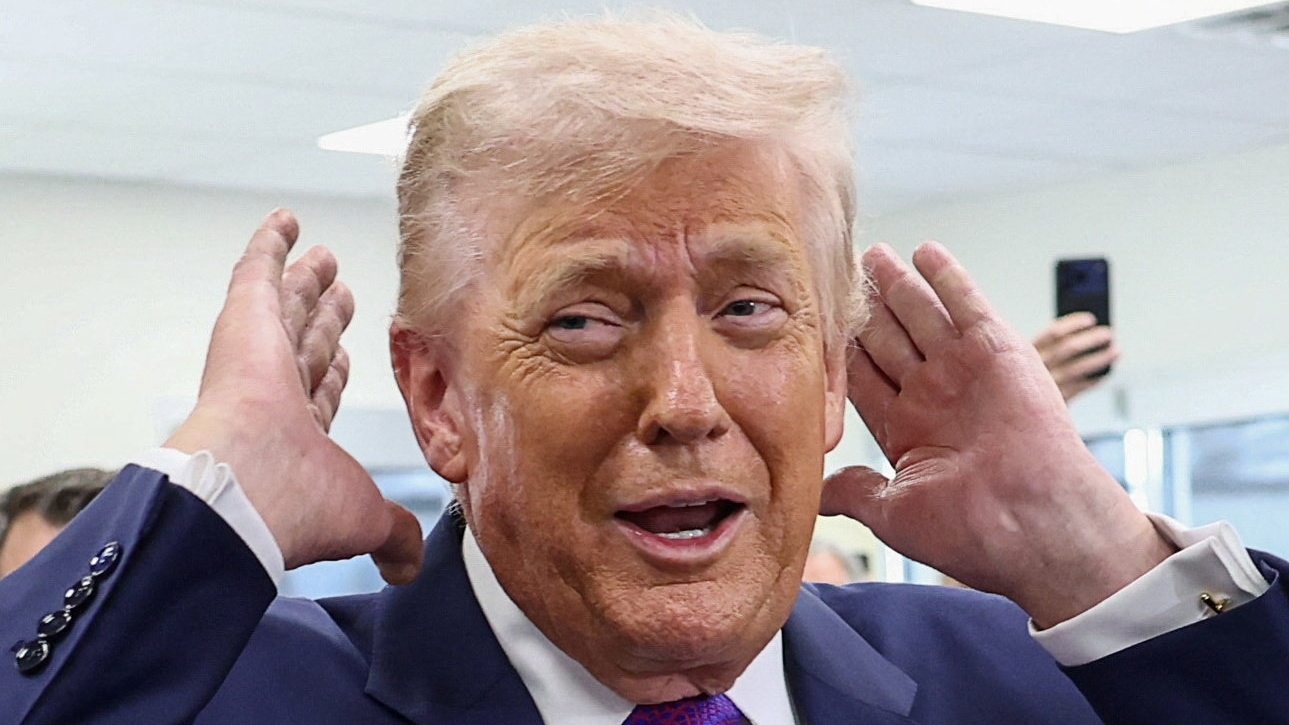
Trump’s Disappearing Hair-Loss Drug Fuels Fresh Health Mystery
Donald Trump has dropped a common hair-loss treatment from his list of publicly disclosed medications—and nobody quite knows why.
Read more Trump Melts Down at Republican Rebels After Humiliating Defeat
Finasteride, an anti-balding drug sold under the brand name Propecia to millions of men in the U.S. each year, has not appeared on any of the president’s medical reports since he retook the White House last January, according to the Washington Post. That includes his latest report, released Friday.
Trump’s aides have declined to say why the medication does not feature on the list or whether its absence means the president is no longer taking it. Side effects can include depression, sexual dysfunction, and, less commonly, enlarged breasts.
“The current report reflects all medications deemed clinically relevant to disclose at this time,” the White House told the Washington Post. “No additional undisclosed conditions or procedures materially affecting his health status were omitted from this report,” they added in reference to the Friday release.
The Daily Beast has contacted the president’s office for further comment.
Robert Klitzman, a leading psychiatrist at Columbia University, told the newspaper that the administration’s reluctance to discuss the president’s use of finasteride raises transparency concerns about the 79-year-old’s health.
“It raises significant questions of what else is possibly not being revealed,” Klitzman said. He further underscored finasteride’s link to depression, adding that the condition could well affect Trump’s ability to execute the duties of his office.
Trump has long faced criticism for being less than forthcoming on the question of his health. His former physician, Dr. Harold Bornstein, wrote a note in 2015 insisting Trump would be the “healthiest individual ever elected to the presidency” ahead of his first stint in office. Bornstein later revealed, in 2018, that Trump had “dictated that whole letter.”
The president came under fire in 2020 for downplaying how badly he’d come down with COVID-19. It later emerged that he had spent three days at Walter Reed National Military Medical Center, where doctors monitored his “dangerously low” blood oxygen levels.
Read more Trump’s MAGA Promise Hit by Humiliating Reality Check
Trump has, during his second term, publicly disclosed three visits to the same clinic amid mounting speculation over his swollen ankles, bruising on his hands, and increasingly erratic public appearances.
The president told reporters in October that one of those check-ups had included an MRI. His comments prompted frantic speculation when he also declined to specify which body part doctors had tested, volunteering only that it wasn’t his brain.
“It wasn’t the brain because I took a cognitive test and I aced it,” he said. His physicians waited until December before clarifying that the MRI was on Trump’s heart and abdomen, both of which they said were free of any abnormalities.
Trump has since repeatedly boasted about “acing” the cognitive screening as a sign of his intellectual brilliance. Medical professionals have been equally quick to flag that the test he undertook, known as the Montreal Cognitive Assessment, is designed to detect signs of impairment rather than genius.
His brags about taking the test three times have also raised alarm, given his increasing displays of memory lapses, confusion, tiredness, and aggression during public appearances. Dr. John Gartner told the Daily Beast that repeated testing suggests medical professionals may in fact be monitoring dementia, rather than just screening for it.
Friday’s three-page summary, which landed in reporters’ inboxes shortly before 11 p.m., pronounced Trump in “excellent health” and “fully fit” for office. Several doctors have since warned that the document contains scant data to support that assessment.
A rash on the president’s neck, flagged by his own physicians earlier this year, went unmentioned. The memo acknowledges the persistent bruising on Trump’s hands, which the White House has chalked up to using aspirin to guard against heart disease, but declines to state just how much the president takes.
Read more Trump Plots Major Reward for His Loyalist Night School Lawyer









Post Comment